BackGemini 3

Gemini 3

OpenAI
2026-08-18 10:50:11

Roboflow says GPT-5.6 Sol is OpenAI’s strongest vision model so far

Roboflow, a third-party computer vision evaluation firm, said GPT-5.6 Sol posted the strongest visual performance yet from OpenAI in its VLM benchmark. The biggest jump came in object detection, where Sol scored 46.2 versus 13.8 for GPT-5.5, while Terra and Luna followed at 44.7 and 43.3. Counting accuracy also improved, with Sol rising from 64.9% to 73%. Roboflow highlighted document layout parsing as another area of progress, saying Sol could cleanly identify titles, body text, tables, illustrations, and signatures in documents. The gains were not universal. In full OCR transcription, Sol scored 90.7%, slightly below GPT-5.5’s 91.2%. In targeted extraction tasks such as pulling a date from an invoice, Sol fell to 82.5% from 87.6% for GPT-5.5. Roboflow also reported that detection boxes could become unstable on images around 2000×2000 pixels or larger, a limitation OpenAI acknowledged. According to Roboflow’s testing, Sol cost about 2.5 cents per image and took around 10 seconds, compared with about 1 cent and 6 seconds for Terra, and under 0.5 cents and 5 seconds for Luna. The firm said Gemini 3.5 Flash remained ahead on detection and counting in this benchmark while also costing less per image.

20
Roboflow says GPT-5.6 Sol is OpenAI’s strongest vision model so far
Google
2026-08-16 16:02:49

Gemini 3.7 Flash review: big coding gains, weaker reasoning and writing still show

Google launched Gemini 3.7 Flash on August 13 and made it generally available in more than 160 countries on day one. According to Decrypt’s review, the model accepts up to 1 million input tokens, returns 64,000 output tokens, handles images, video, audio, and PDFs, and can use tools while operating a computer. Google’s own benchmark sheet says the model beats Claude Sonnet 5 and GPT-5.6 Terra in 11 of 18 tested categories, including 1,588 Elo on Code Arena’s web development board and 30.4% on AutomationBench, though Decrypt notes those figures come from Google’s methodology and should be treated as company claims rather than settled fact. Decrypt’s hands-on tests found the sharpest improvement in coding. Gemini 3.7 Flash generated a playable browser game on the first try in 2 minutes and 13 seconds, a major step up from Gemini 3.6 Flash, which Decrypt said could not produce a working file in a similar test after its July 21 release. Results were less convincing elsewhere. In creative writing, Decrypt said Gemini produced a tidy story but broke the central prompt rule, losing to a free community model, Qwopus3.5-27B-v3. In associative reasoning, logic, and advanced math, the review said Gemini often showed decent structure but failed on crucial task requirements, including a bridge puzzle and a polynomial problem it left unfinished. Decrypt’s conclusion: Gemini 3.7 Flash is a strong low-cost execution model inside Google’s ecosystem, but its creativity and reasoning remain uneven.

200
Gemini 3.7 Flash review: big coding gains, weaker reasoning and writing still show
Google
2026-08-14 10:06:51

Google launches Gemini 3.7 Flash three weeks after 3.6, with lower pricing aimed at coding and agent work

Google has released Gemini 3.7 Flash on Aug. 13, shortening its model update cycle to roughly three weeks after Gemini 3.6 Flash. According to Google’s announcement, the new model is positioned as a high-value offering for coding and agent tasks, while also targeting document-heavy knowledge work and web development. It supports text, image, audio, and video input, comes with a 1 million-token context window, and can generate up to 64,000 output tokens. Google said Gemini 3.7 Flash improved on several benchmarks versus Gemini 3.6 Flash, including FrontierCode 1.1, which rose from 34.4% to 43.6%, AutomationBench from 17.0% to 30.4%, and the document-understanding benchmark GDP.pdf from 22.0% to 34.0%. The product is being offered through API and enterprise channels, including Gemini API, Google AI Studio, Antigravity, Android Studio, and Gemini Enterprise. Consumer access is available through Gemini Spark under AI Pro and Ultra plans. Google is not releasing open-weight access for the model. Pricing is a central part of the launch. Through Dec. 31, 2026, input costs are set at $0.75 per 1 million tokens and output at $3.75, before rising to $1.5 and $7.5 in 2027. Using an 80/20 input-output mix, ABMedia estimated blended cost at about $1.35 per 1 million tokens, below Sonnet 5 at $3.60 and GPT-5.6 Terra at $4.00.

170
Google launches Gemini 3.7 Flash three weeks after 3.6, with lower pricing aimed at coding and agent work
Google Resear
2026-08-14 07:41:09

Google study says GPT-5 and Gemini 3 often know facts but fail to recall them

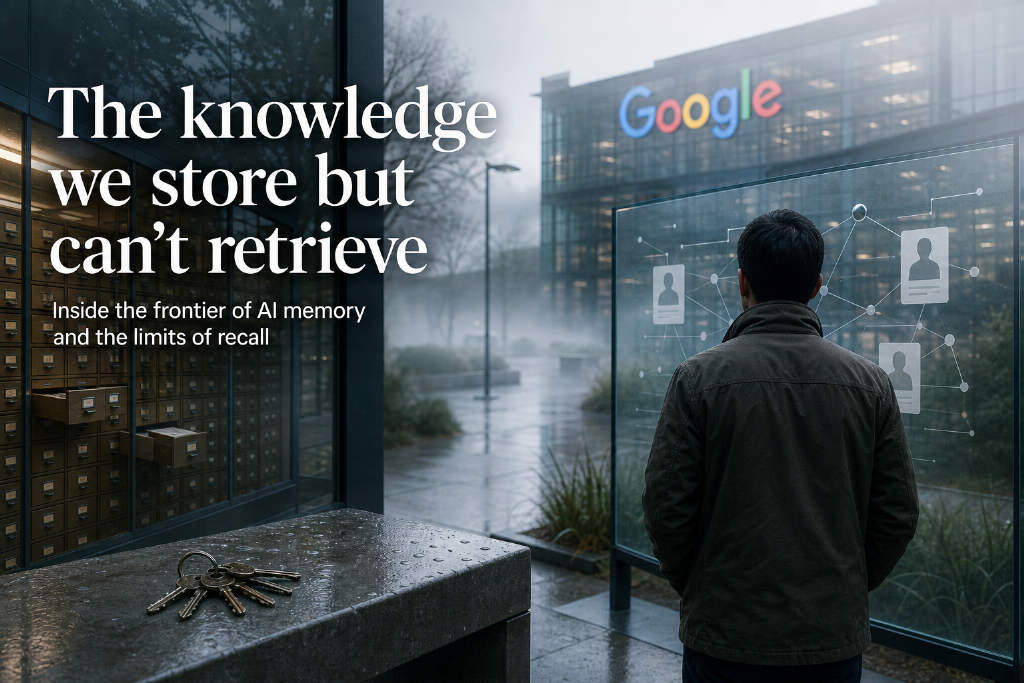
Google Research says a large share of factual errors in frontier language models may come from retrieval failure rather than missing knowledge. In a study titled "Empty Shelves or Lost Keys?" and accepted at ICML 2026, researchers found that GPT-5, Gemini 3 and other tested models had already stored 95%–98% of benchmark facts in their parameters, yet still failed to produce 26%–34% of those facts in direct question answering. Even with thinking enabled, 11%–12% remained inaccessible. The work introduces a "knowledge states" framework and a new benchmark called WikiProfile, built from 2,150 English Wikipedia facts and 21,500 associated questions. Google evaluated 13 models across the Gemini 3, GPT-5, GPT-4.1 and Gemma 3 families, with and without thinking, sampling each question eight times for roughly 4.5 million responses. The results point to two major choke points: rare facts and reversed questions. The paper argues that in both cases the issue is often not that the model never learned the fact, but that it struggles to retrieve it when wording or direction changes. Google also reports that thinking helps recover 40%–65% of facts that were stored but initially unreachable, while helping only 5%–15% on facts that were never stored, suggesting thinking can function as a recall aid rather than only a reasoning tool.

130
Google study says GPT-5 and Gemini 3 often know facts but fail to recall them
US inflation
2026-08-14 04:32:57

Cooling CPI and PPI lift Wall Street, but long-dated Treasuries and drone tariffs keep pressure in view

U.S. equities ended higher after softer inflation data helped push the S&P 500 to another record close, with the Nasdaq and Dow also advancing. July producer prices cooled to 4.7% year over year from 5.5% in June, while the market lifted the odds of the Federal Reserve holding rates steady in September to around 65%. Even so, the long end of the Treasury market sent a different signal: the 30-year bond auction cleared at 5.216%, the highest since 2001, and indirect bidding weakened, pointing to growing concern over fiscal supply and term premium. Sector leadership was narrow. SanDisk surged after issuing aggressive long-term targets at its 2026 investor day, lifting Western Digital, SK Hynix, Seagate, Micron and the Roundhill storage ETF. Workday also jumped on a Reuters report that Silver Lake had held acquisition talks for months. In contrast, optical networking names and parts of the AI hardware trade reversed lower, while Cisco fell despite record quarterly revenue as investors focused on margin concerns. Oil prices retreated after both the IEA and OPEC lowered demand expectations, and Donald Trump signed a proclamation imposing 10% to 100% tariffs on imported drones and related parts on national security grounds.

390
Cooling CPI and PPI lift Wall Street, but long-dated Treasuries and drone tariffs keep pressure in view
Whale Movemen
2026-08-14 02:11:00

Overnight crypto roundup: Bullish posts a loss, Tether says audit completed, Sharplink stakes $200 million in ETH

A broad set of crypto, AI, and macro headlines landed between Aug. 13 and Aug. 14. Bullish reported a second-quarter net loss of $280 million as digital asset trading volume fell to $32.6 billion from $58.6 billion a year earlier. Ethereum treasury firm Bit Digital said it bought 8,568 ETH for $20 million in the quarter and ended the period with about 164,310.5 ETH, while Sharplink said it will stake $200 million worth of ETH through Lido and hold wstETH with Anchorage Digital as custodian. Tether said KPMG U.S. issued an unqualified opinion on the 2025 financial statements of Tether International, S.A. de C.V., describing it as the company’s first full independent financial statement audit. Elsewhere, Gemini reported $45.5 million in quarterly revenue and a net loss of $107.7 million, Nakamoto disclosed a $48.7 million bitcoin-related digital asset valuation loss, and AVAX One said unrealized non-cash losses on digital assets drove a $35.1 million net loss. On the policy side, CFTC Chair Michael S. Selig said the agency’s Innovation Advisory Committee will hold its first meeting on Aug. 20 to discuss crypto assets, AI, and prediction markets. In macro data, U.S. July PPI rose 4.7% year over year, weekly initial jobless claims came in at 209,000, and CME FedWatch showed a 65.2% probability that the Federal Reserve leaves rates unchanged in September.

350
Overnight crypto roundup: Bullish posts a loss, Tether says audit completed, Sharplink stakes $200 million in ETH
Google
2026-08-13 09:46:31

Leak says Google may launch Gemini 3.7 Flash today with API pricing cut in half

A new report cited by ChainCatcher says Google could roll out Gemini 3.7 Flash as soon as today, with API pricing potentially dropping to $0.75 per million input tokens and $3.75 per million output tokens. That would be a sharp reduction from the current standard pricing for Gemini 3.6 Flash, which stands at $1.50 for input and $7.50 for output per million tokens. If the leaked pricing is accurate, the new model would come in at roughly half the current rate. The report also notes that speculation around Gemini 3.7 Flash has been building for some time. Google’s official Python GenAI SDK briefly included a reference to `gemini-3.7-flash`, before the related pull request was renamed to "internal" and then closed. Separately, SemiAnalysis said last week that Google had internally canceled Gemini 3.5 Pro, previously seen as a flagship model, and shifted the team toward a larger Gemini 4 effort. According to leo, he has heard the same internally.

210
Leak says Google may launch Gemini 3.7 Flash today with API pricing cut in half
AI security
2026-08-13 00:14:20

Researchers say hidden reasoning traces from major AI models were once recoverable through smaller sibling models

A research team from MATS Research, the University of Tübingen, the Max Planck Institute for Intelligent Systems and other institutions says proprietary large language model APIs previously exposed a way to recover hidden reasoning traces without breaking encryption or compromising servers. In a paper titled “Stealing Reasoning Traces from Proprietary LLM APIs,” the authors describe how encrypted reasoning blobs returned by flagship models could be fed back into smaller models from the same vendor, which then reproduced the hidden content. The paper names three examples: Anthropic’s Claude Opus 4.8 with Haiku 4.5, OpenAI’s GPT-5.6 Sol with GPT-5.6 Luna, and Google’s Gemini 3.1 Pro with Gemini Robotics 1.6. The researchers also examined 6,708 public agent trajectories gathered from GitHub and Hugging Face and said they recovered 315,320 hidden reasoning segments, including API keys, passwords, personal email addresses, access tokens and private keys. The paper estimates that, at Haiku 4.5 pricing at the time, decoding 10,000 reasoning traces with 12,000-token input and output windows would carry a nominal cost of about $720. The team says it reported the issue to Anthropic, OpenAI, Google, Microsoft and Hugging Face through responsible disclosure, and that the original attack method could no longer be reproduced by the time the paper was released.

530
Researchers say hidden reasoning traces from major AI models were once recoverable through smaller sibling models